Category

Drive

Category

There are a few habits that people who always get great deals on cars have that most buyers ignore. Nothing is complicated. Most of it is just preparation, knowing when to buy, what to check and when to walk away. Information and timing are usually the difference between overpaying and winning.

When to Buy Matters More Than What to Buy

People who are buying a car usually spend a lot of time thinking about which car to buy. They think about the color of the car and the trim level and other options. What people often forget is that choosing the right time to buy a car is just as important as which car they buy.

End of Month, End of Quarter, End of Year

The month of December is often a time to buy a car because car dealers want to get rid of their old cars before the year ends. Buying on the last week of any quarter (March, June, September) follows the same logic. If you have flexibility on timing, use it to your advantage.

Model Year Changeovers

When a new model year rolls out, the old model is suddenly put on sale almost overnight. Mechanically, there is usually little difference between a 2025 model and a 2026 model, but the price difference can be huge.

Track when manufacturers typically release new models for the car you want. Showing up right after the new version hits the lot gives you leverage on the previous year’s stock.

Information Is the Real Currency

In any negotiation, the side with better information wins. Car buying is no different.

Vehicle History and Market Data

Before you even see a car in person, you should know its history. Use a VIN check through Carfax or AutoCheck to see if the car has been in an accident, has title problems, service history and ownership history. Ask yourself: what do comparable cars go for in your area? Kelley Blue Book, Edmunds and local listings will give you a realistic price range.

This principle applies broadly to any situation involving risk and incomplete information. People who research before committing – whether buying a car or choosing an online platform – get better outcomes. Sites like Casino mit schneller Auszahlung collect information on sites with fast payouts, so you can make an informed choice – not a random one.

Negotiation Tactics

Start with a specific number based on market research, not the dealer’s asking price. Anchoring the negotiation around real data puts you in a stronger position than reacting to whatever they offer first.

Look at the out-the-door price – that’s the total price, including taxes, fees and all the rest. Sometimes dealers will reduce the sticker price, but tack on fees elsewhere. Make sure you get the bottom line before you start talking about anything else.

And never fall in love with a car until you own it. The minute you let the salesperson see that you care, you lose your power. Stay neutral, ask questions and be honest about walking away. Just that willingness changes their dealings with you.

Financing Traps and How to Avoid Them

Dealer financing sounds convenient, but convenience often costs money. Before visiting the lot, get pre-approved for a loan through your bank or credit union. That rate becomes your baseline – if the dealer can beat it, great. If not, you already have a better option.

Watch for these common traps:

  • Focusing on monthly payments instead of total cost – a lower payment stretched over more months often means paying more overall
  • “Special financing” offers that sound good but carry higher interest rates than standard loans
  • Fees hidden deep in papers that weren’t mentioned during negotiation

Which Cars Hold Value

Depreciation is the hidden cost of car ownership. Most new cars lose 20-30% of their value in the first year alone. Some brands hold their value better than others. Toyota, Lexus, and Porsche consistently rank at the top for resale value. Honda and Subaru follow close behind. On the other end, certain luxury brands and models with poor reliability records depreciate quickly.

Checking projected resale values before buying isn’t just about eventually selling the car – it’s about understanding the true cost of ownership. Kelley Blue Book publishes annual reports on which vehicles retain value best, based on years of market data.

If you’re buying used, this works in your favor. Look for models that depreciate heavily in the first two or three years but have strong reliability records. Someone else takes the depreciation hit; you get a solid car at a lower price.

The Inspection Rule – Never Skip This Step

If you are thinking of buying a used car it is an idea to get a pre-purchase inspection done by a mechanic who is not connected to the seller. This will cost you around one hundred dollars to two hundred dollars and will help you to prevent expensive mistakes.

A good mechanic can tell you if there are any problems that might come up in the future. This gives you a reason to ask the seller to lower the price of the car or to just walk away from the deal.

You can find a list of things to look for when you inspect a used car on the Consumer Reports website. They also have advice, on how to find a mechanic you can trust. It is an idea to use their list when you are getting ready to have your used car inspected.

Checklist – What Smart Buyers Do Before Signing

Here is a summary of what smart buyers do to get a good deal:

  • Check the market value of a car using sources like KBB, Edmunds and local listings
  • Get a vehicle history report using Carfax or AutoCheck to know the cars past
  • Get pre-approved for financing before going to a dealership
  • Hire someone to inspect the car before buying it
  • Know the cost of the car including all fees and taxes before signing
  • Be ready to cancel the deal if something feels off
  • Buy a car at the time like at the end of the month, quarter or model year

None of this takes unusual skill – just preparation.
Anyone who’s taken a Tesla for a spin knows the feeling. You know that feeling when you drive a Tesla and take your foot off the gas pedal? The car starts slowing down on its own – more noticeably than any gas car. It’s a bit weird at first, but after a few days most people don’t want to go back.

And while most Tesla owners have a rough idea that it “saves energy somehow,” the details of how it actually works – and the fact that you can tweak the settings to your liking – tend to fly under the radar.

The Motor Works Both Ways

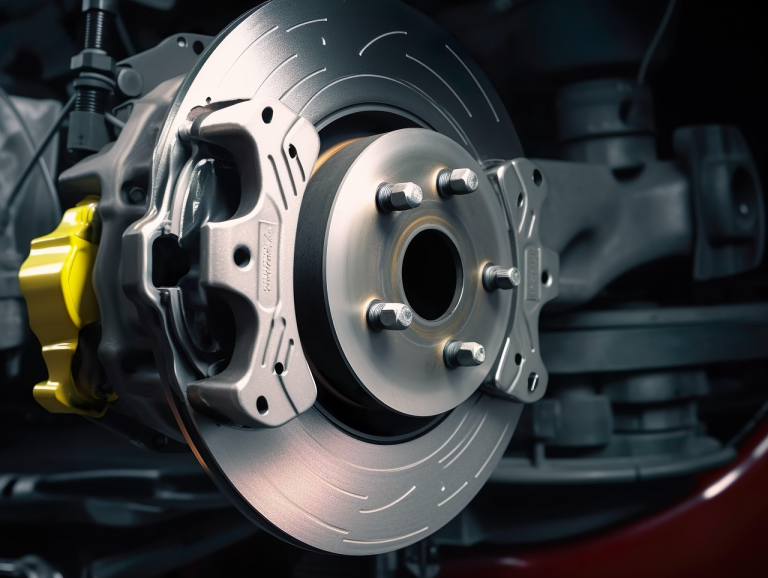
When you press the accelerator pedal, it uses energy from the battery and spins the wheels. But when you take your foot off the pedal, the wheels keep turning, and now they’re spinning the motor instead. That motion gets converted back into electricity and pushed into the battery.

How much does this actually matter? Tesla claims you can recover up to 30% more range depending on how you drive. City traffic with lots of stopping and starting is ideal, as well as hilly roads. Driving on the highway at a steady speed doesn’t give the system much to work with.

What It Feels Like And Why It Takes Getting Used To

Those who has been driving a gas car will have hard time getting used to this Tesla feature. The car slows down more aggressively than it does in a regular car.

The One-Pedal Thing

You control your speed with the gas pedal. Press down to go, lift up to slow down. With some practice you can stop the car without using the brake pedal at all. The brake lights turn on automatically when you’re decelerating hard enough – so you’re not catching anyone off guard.

Feels Weird Until It Doesn’t

At first it feels jerky because you keep lifting off quickly and slowing down too much. After a week or two it becomes nature. You learn to use the gas pedal like a dial than an on-off switch easing off gradually instead of just letting go.

Playing with the Settings

Tesla lets you customize how strong the regenerative braking feels. You can adjust it under Controls > Pedals & Steering.

Standard vs Low

Standard mode is the full experience – maximum energy recovery, noticeable deceleration, one-pedal driving at its best. Low mode makes the car feel like a traditional automatic, but you’re recovering less energy and wearing out your brakes faster.

What Happens When You Stop

There’s also a setting for what the car does once you’ve come to a full stop:

  • Hold: The car stays in place – no need to keep your foot on the brake
  • Roll: The car drifts slowly forward like a gas car in neutral
  • Creep: The car mimics the creep of a traditional automatic transmission

Most people who’ve been driving Teslas for a while stick with Standard regen and Hold. Once you’re there, everything else feels like a step down.

Sometimes the System Backs Off

Regenerative braking doesn’t always work at full strength. A few things can limit it:

  • A cold battery needs time to warm up before it can accept charge properly – winter mornings are the culprit
  • If you’ve charged to 100%, there’s nowhere to put the extra energy, so regen gets dialed back
  • A low battery can trigger protective limits too
  • On slippery roads, traction control might reduce regen to keep the wheels from locking up

When any of this happens, you’ll see a dotted line on the power meter. The car still slows, but not as sharply, and you’ll need to use the brakes more than usual.

Tesla’s support page goes into detail on all of this, including how preconditioning the battery before you drive can help.

Getting More Out of It

Here are some tips that help you maximize regeneration:

  • For daily driving, charge to around 80-90% instead of 100%. That way there’s room in the battery for regen to work right from the start.
  • In cold weather, use the app to precondition the car before you leave – a warm battery recovers energy much more efficiently.
  • Stick with Standard regen mode unless you have a reason not to; it saves more energy and goes easier on your brake pads.
  • If you’re driving somewhere hilly, keep in mind that every descent is basically free range, as long as there’s space in the battery to store it.

Testing by Edmunds has backed up what most owners already feel: regenerative braking makes a noticeable difference in real-world range, especially in city driving where you’re stopping and starting all the time.

More Than a Gimmick

Regenerative braking isn’t just a cool feature that looks good on paper. It actually helps you drive farther reduces brake wear and – once you’re used to it – makes the whole driving experience smoother and more intuitive.

The key is understanding how the settings work and what can limit the system. Once you do, you’re getting more out of every drive. And one-pedal driving, strange as it sounds at first, becomes the kind of thing you miss the moment you get into a regular car.


If you own an old vehicle that keeps breaking down, has rust damage, or costs more to repair every year, you are not alone. Across Ontario, thousands of drivers eventually face the same question: should you keep fixing your car, or is it finally time to scrap it?

The good news is that Ontario has many reputable scrap yards and auto recycling facilities that make the process easier. Whether you want to sell a junk car for cash, find affordable used auto parts, or recycle a vehicle responsibly, choosing the right scrapyard matters.

This guide explains how scrap yards work, what to look for, and some of the best options in Ontario for auto parts and cash-for-cars services.

Why Scrap Yards Matter in Ontario

Ontario drivers deal with tough vehicle conditions. Snow, road salt, freezing temperatures, potholes, and long commutes can shorten the lifespan of almost any vehicle.

As cars age, problems like these become more common:

  • Rusted frames and body panels
  • Transmission failure
  • Engine problems
  • Electrical issues
  • Suspension damage
  • Failed emissions or safety inspections
  • Expensive repair bills

Instead of letting an old vehicle sit unused in your driveway, many owners turn to auto recycling facilities. Scrap yards help recycle vehicles safely while allowing usable parts to stay on the road longer.

What Makes a Good Scrap Yard?

Not all scrapyards offer the same level of service. Some focus mainly on metal recycling, while others specialize in reusable auto parts and cash-for-cars programs.

Here are some important things to look for when choosing a scrapyard in Ontario.

Fair Cash Offers

A trustworthy scrapyard should provide transparent quotes based on:

  • Vehicle condition
  • Weight and scrap metal value
  • Make and model
  • Reusable parts
  • Current market demand

Vehicle Pickup Services

Many scrapyards offer free towing or pickup services across Ontario. This is especially useful if your vehicle no longer runs.

Environmentally Responsible Recycling

Professional recycling yards safely remove:

  • Engine fluids
  • Batteries
  • Tires
  • Refrigerants
  • Hazardous materials

This helps reduce environmental damage and keeps recyclable materials out of landfills.

Large Auto Parts Inventory

Some scrapyards allow customers to purchase affordable used OEM parts. This can save drivers hundreds or even thousands of dollars compared to buying new parts.

Positive Customer Reviews

Check Google reviews and local reputation before choosing a scrapyard. Strong reviews often show fair pricing, professional staff, and reliable service.

Comparison Table: What to Look for in an Ontario Scrap Yard

Feature Why It Matters
Free Vehicle Pickup Saves towing costs
Cash Payments Fast and convenient
Used Auto Parts Lower repair costs
Eco-Friendly Recycling Reduces waste and pollution
Large Inventory Better chance of finding parts
Ontario Locations Easier access and faster service
Good Reviews More trustworthy experience

Best Scrap Yards in Ontario

Here are some well-known and trusted options drivers often consider across Ontario.

Kenny U-Pull

One of the best-known self-serve auto recycling companies in Canada, Kenny U-Pull offers both used auto parts and vehicle recycling services.

Drivers looking for cash for cars in Ontario  often choose Kenny U-Pull because the process is simple and transparent. The company operates multiple locations and focuses heavily on environmentally responsible recycling.

What makes them stand out:

  • Large inventory of used auto parts
  • Self-serve yard system
  • Vehicle recycling services
  • Fast vehicle pickup
  • Cash offers for old cars
  • Strong presence across Canada

Kenny U-Pull is especially useful for drivers trying to lower repair costs by purchasing recycled OEM parts instead of brand-new replacements.

Standard Auto Wreckers

Operating in Ontario for decades, Standard Auto Wreckers is one of the province’s most recognized names in vehicle recycling.

They offer:

  • Scrap vehicle pickup
  • Used parts
  • Car recycling
  • Salvage vehicle services

Their large inventory makes them popular among mechanics and DIY vehicle owners looking for affordable replacement parts.

Ontario Auto Salvage

Ontario Auto Salvage focuses heavily on buying scrap vehicles and recycling automotive materials.

Their services include:

  • Junk car removal
  • Scrap vehicle recycling
  • Cash payments
  • Auto salvage services

This type of scrapyard is ideal for vehicles that are no longer repairable.

Auto Heaven

Auto Heaven is another popular Ontario auto recycler with a strong used parts inventory.

Drivers often choose them for:

  • Recycled auto parts
  • Hard-to-find components
  • Affordable repair solutions
  • Scrap vehicle recycling

Why More Canadians Are Buying Recycled Auto Parts

Vehicle repairs have become much more expensive in recent years. Inflation, supply chain delays, and rising labour costs continue to impact Canadian drivers.

Because of this, recycled OEM parts are becoming more popular.

Lower Repair Costs

Used OEM parts are often much cheaper than new dealership parts.

Better Availability

Older vehicles sometimes require discontinued parts that are difficult to buy new.

Eco-Friendly Repairs

Reusing parts reduces waste and lowers the environmental impact of vehicle manufacturing.

OEM Fit and Compatibility

Original manufacturer parts often fit better than some aftermarket alternatives.

Signs It Might Be Time to Scrap Your Vehicle

Many Ontario drivers continue repairing vehicles long after it makes financial sense. Here are some common warning signs your car may be headed for the scrapyard.

Repair Costs Exceed Vehicle Value

If repairs cost more than the vehicle itself, scrapping it may be the smarter option.

Severe Rust Damage

Ontario winters are brutal on vehicles. Excessive rust can weaken frames, brake lines, and suspension systems.

Constant Breakdowns

Frequent mechanical failures usually point to deeper long-term problems.

Failed Safety Inspection

Some vehicles require major repairs just to pass Ontario safety inspections.

Transmission or Engine Failure

Replacing a transmission or engine can cost thousands of dollars, especially on older vehicles.

How the Scrap Car Process Works

Many people have never scrapped a vehicle before. Fortunately, the process is usually straightforward.

Step 1: Request a Quote

You provide information about the vehicle, including:

  • Make and model
  • Year
  • Condition
  • Mileage
  • Location

Step 2: Accept the Offer

Once you agree to the offer, the scrapyard schedules pickup or drop-off.

Step 3: Vehicle Pickup

Many companies tow the vehicle for free.

Step 4: Receive Payment

Most reputable scrapyards pay cash or electronic transfer upon pickup.

Step 5: Vehicle Recycling

The vehicle is dismantled, reusable parts are removed, and remaining materials are recycled.

Environmental Benefits of Auto Recycling

Many people do not realize how important vehicle recycling is for the environment. Proper recycling helps reduce landfill waste and conserves raw materials.

Benefits of vehicle recycling include:

  • Reduced steel waste
  • Lower manufacturing demand
  • Safer disposal of hazardous fluids
  • Reduced environmental pollution
  • Reuse of valuable vehicle components

This is one reason why reputable recycling yards matter so much.

Tips Before Selling Your Scrap Car

Before handing over your vehicle, take a few important steps.

Remove Personal Belongings

Check the glovebox, trunk, centre console, and under seats carefully.

Remove License Plates

Ontario drivers usually need to remove plates before pickup.

Gather Ownership Documents

Having ownership papers helps speed up the process.

Compare Quotes

Different scrapyards may offer different prices depending on demand and reusable parts.

Cancel Insurance

Once the vehicle is gone, contact your insurance provider.

Final Thoughts

Ontario has many reputable scrap yards that help drivers recycle old vehicles responsibly while earning money for unwanted cars.

Whether you need affordable used parts or want to remove a damaged vehicle quickly, choosing the right scrapyard can save time, money, and stress.

For many drivers, scrapping an old car is not just about getting rid of a problem vehicle. It is also an opportunity to recover value, reduce waste, and help reusable automotive parts stay on the road longer.

Electric vehicles are not just the future anymore—they’re already reshaping how people drive and how companies grow. With a recent event focused on faster battery charging, one automaker has sparked excitement among investors and drivers alike. This bold move could push EV sales higher and shift how the world looks at electric transportation. Even some of the best non GamStop casinos, which rely on smart tech for payments and systems, are watching closely as these changes affect broader industries. Here’s a closer look at what’s happening.

New EV Charging Speeds Are a Game Changer

The company revealed a lineup of electric cars that can charge in around 5 minutes. That’s about the same time it takes to fill up a tank of petrol. This is possible thanks to a powerful new battery system. These batteries are designed not only to store more energy but also to absorb it faster. In daily use, that means less waiting and more driving. If you’re someone who avoids EVs because of long charging times, this could make you think again. It removes one of the biggest barriers to switching from petrol or diesel cars.

The Tech Behind the Speed: Stronger Batteries

The new cars are based on upgraded battery technology. These batteries are more robust and built to last longer. They also stay cooler during fast charging, which improves safety. By adding this stronger tech to all their upcoming models, the company is betting big on faster, more reliable performance. For you as a driver, this means your car won’t just charge fast—it will also run longer on a single charge. This could make EVs a better choice even for long-distance travel.

Better Infrastructure Means Fewer Hassles

Alongside better batteries, the company is investing in improved charging infrastructure. That means more stations, faster chargers, and easier access. If you’ve ever struggled to find a working charger or had to wait in line, this is good news. With a stronger network, you’ll be able to charge your EV as easily as you now buy fuel. This kind of infrastructure is needed to support mass EV adoption. Without it, fast charging doesn’t mean much. The goal here is to make electric vehicles practical for everyday life.

Plug-in Hybrids Get a Boost Too

Last year, the company improved its plug-in hybrid vehicles. These cars use both petrol and electric power, giving drivers flexibility. Now, with these latest upgrades, they’re making those hybrids even more powerful and efficient. If you aren’t ready to go fully electric, these new plug-in models offer a good middle path. They let you drive on electric power when it’s convenient and still use fuel when needed. That makes them useful for longer trips or areas with fewer charging stations.

What It Means for the Market and Investors

The company’s stock went up after the event. Investors see this as a smart move—betting on better tech and user-friendly upgrades. Stronger EV sales mean better company performance in the long run. With the stock already hitting recent highs, this could attract more investment. If you follow market trends or invest your money, it’s worth paying attention to how this strategy develops. Major moves like this can affect not just the car industry, but also tech, energy, and finance.

EVs and the Broader Tech Shift

What’s happening here isn’t just about cars. It’s about a shift toward smarter, cleaner systems in many parts of life. From how you power your home to how you manage your money, technology is leading the way. The same mindset behind fast-charging batteries is behind smarter payments, faster apps, and cleaner solutions. Even outside the car industry, these innovations matter.

Why It Matters for Everyday People

If you’ve thought EVs are too slow to charge or hard to manage, this news could change your view. Charging times are dropping, battery life is rising, and support networks are expanding. That makes electric cars easier to own and use. For daily tasks—going to work, school, or the shop—you may not even need to charge more than once or twice a week. And when you do, it will be quick. That’s convenience without compromise.

The Role of Regulation and Policy

Government support plays a role too. As more countries push for lower emissions, companies like this are racing to meet demand. Incentives for EV buyers, clean energy rules, and better city planning all support this shift. That’s why companies are investing now—to stay ahead of coming laws and consumer needs. When companies take early steps, it gives you more choices as a customer.

The Future Looks Fast and Electric

The message is clear: electric vehicles are no longer just about being green—they’re becoming smarter, faster, and more practical. With new battery tech, improved hybrid systems, and better charging stations, this company is trying to lead the pack. If you’ve been waiting for the right time to switch or just want to follow how technology is changing the world, this moment is worth watching. It’s not only about cars—it’s about how smart innovation is reshaping the way you live and move every day.

If you ride a bike with a 100cc to 300cc engine, you are like most people on the road. But just owning a bike is not enough—you need to take care of it regularly. Many riders forget or delay servicing, and that can lead to high repair costs later. Knowing when and how to service your bike can help you ride safely and save a lot of money. These tips are simple to follow, and they make a big difference.

Don’t Wait Too Long Between Services

A common mistake many riders make is waiting too long before taking their bike for a service. Some do it only every six months or even after 5000 to 6000 kilometres. That’s too late. Ideally, you should service your bike every 3000 to 4000 km. For a 100cc bike, service every 2500–3000 km. For a 150cc, aim for 3500–4000 km. For 200cc bikes and above, service every 4000–4500 km. Regular servicing helps prevent major issues and cuts your total repair costs by half over time.

Make a Note of Problems Before You Visit the Workshop

Often, you forget the small problems once you reach the service centre. Maybe you noticed a sound from the brakes or a loose chain, but when it’s time to explain, you draw a blank. So, it helps to make a list on your phone when you spot a problem. Note everything down and show it to the mechanic. It saves time, avoids missed issues, and prevents minor problems from becoming major repairs later. Keeping notes is a smart habit that helps you communicate better with your mechanic.

Keep a Service Record for Future Use

After every service, write down what was done and when. Keep a simple diary or note it in your phone. This helps you track your bike’s condition and avoid repeating unnecessary work. Also, when you sell your bike later, having complete service records can increase its value. It shows the new owner that the bike has been maintained well. A record of oil changes, part replacements, and inspections helps build trust and gets you a better deal during resale.

Choose Authorised Service Centres Over Cheap Garages

It may seem like you’re saving money by visiting a local mechanic, but poor-quality work can cost you more in the long run. Cheap garages often use low-grade parts or skip steps. Authorised service centres charge a bit more, but the staff is trained and knows exactly what your bike needs. They also follow a checklist, use the right tools, and provide official job cards. It’s better to pay a little more now than pay double later for avoidable damage.

Be Present During the Service If Possible

If you have the time, try to be there when your bike is being serviced. It usually takes 1 to 1.5 hours. When you are present, you can see if the engine oil is changed properly, check the condition of parts, and ask questions. Also, your presence makes the mechanic more careful. You don’t need to interfere—just observe. Being there gives you peace of mind and makes sure the job is done properly.

Don’t Skip on Engine Oil and Fluids

The engine oil is like blood for your bike’s engine. You should change it every 3000 to 5000 km, depending on the engine size. For 100cc and 150cc bikes, normal mineral oil is good enough. Synthetic oil is more expensive and not needed unless you ride a high-performance bike. Along with oil, always check coolants, brake fluids, and clutch oil. Top them up if needed. These small checks can save your bike from bigger problems and make it run smoother.

Check the Brakes and Battery Condition

Brakes are essential, especially during the rainy season. Always inspect brake pads and discs during every service. Worn-out brakes reduce stopping power and are unsafe. The bike battery also weakens over time. If it’s more than 2–3 years old, get it tested. Batteries usually come with a warranty, so check the date and use the warranty if needed. A weak battery can lead to starting trouble and electronic failures, so don’t ignore it.

Test Ride Before Leaving the Workshop

Before you leave the service centre, take your bike for a short test ride. Listen for strange sounds, check if the brakes feel tight or loose, and see how smooth the engine runs. If anything feels wrong, tell the mechanic right away. Once you leave, it’s harder to prove the issue was there. Many people forget this step and later regret spending money on incomplete work. A test ride is the best way to confirm your bike is truly ready.

Store Job Cards and Bills Safely

Every time your bike is serviced, you receive a job card or bill. Don’t throw it away. Keep all these papers together in one file or digital folder. These documents are useful to check warranty dates, past issues, and what parts were replaced. They are also valuable when you decide to sell your bike. Just like keeping service records, these papers show the bike was cared for, and buyers are more likely to pay a better price for a well-documented vehicle.

Don’t Forget the Long-Term Benefits

Taking care of your bike is not just about saving money now. It’s also about keeping your bike in good condition for longer. A well-maintained bike gives you better fuel efficiency, fewer breakdowns, and safer rides. It also helps you avoid unexpected costs and major repairs. The more you take care of it, the more it takes care of you.

With these simple but powerful habits, you can extend your bike’s life, lower your repair costs, and ride safely every day. All it takes is a bit of planning and regular attention.

Are you tired of constantly battling with a messy and disorganized garage while trying to keep your car in top shape? As someone who loves to take care of their ride, you deserve a space that looks great and makes your car maintenance routine a breeze.

Epoxy flooring is perfect for this! With it, car maintenance has never been easier or more efficient. This versatile flooring option provides a sleek and modern look to your garage. It offers numerous benefits that can revolutionize your car maintenance routine in Atlanta.

In this post, we’ll talk about how installing epoxy flooring in Atlanta can improve the efficiency of your car maintenance routine and other advantages you will want to pay attention to. Let’s dive in!

Benefits of Epoxy Flooring for Car Maintenance

With epoxy flooring, you won’t have to worry about spills and stains ruining your floor. It’s normal to have drips and spills of oil and other fluids when operating your automobile in a garage. Epoxy flooring prevents spills from staining or ruining your garage floor. Spills and debris can be swiftly wiped off epoxy flooring without leaving any traces or residue.

Epoxy flooring is not only stain- and spill-proof but also very long-lasting. Vehicles and heavy machinery are no match for its might. There won’t be any need to stress about our garage floor cracking or deteriorating over time and requiring expensive repairs.

Epoxy flooring also helps make garages for automobile owners a safer place to work. With its non-slip properties, epoxy flooring is an excellent choice for the garage. This is of the utmost importance when handling potentially dangerous items or equipment.

Specific Benefits for Car Owners in Atlanta

There are many benefits that come with epoxy flooring. Let’s enumerate some of them.

Weatherproofing

Atlanta’s hot, muggy summers and mild winters can damage cars. Epoxy flooring protects cars from moisture and temperature changes.

Cleans Easily

Due to Atlanta’s unpredictable weather, cars can rapidly become dirty. Epoxy flooring is easy to clean and can be hosed down without fear of damaging the floor or causing staining. This makes it easier for car owners to keep their cars clean and maintain their appearance.

Safe Parking

Epoxy flooring provides a slip-resistant surface.

Ensuring that cars parked in the facility remain in place and do not slide or shift around, which could potentially cause damage to other vehicles or people. This makes it safer for car owners to park their vehicles without worrying about accidents or collisions.

Spill Protection

Epoxy flooring is resistant to chemicals, which means that any spills from oil or other fluids will not damage the floor or cause stains. This makes it easier for car owners to perform maintenance tasks on their vehicles without worrying about damaging the flooring.

Aesthetically Pleasing

Epoxy flooring is available in a range of colors and finishes, allowing car maintenance facilities in Atlanta to create a customized look that matches the overall aesthetics of the facility. This provides a more visually appealing environment for car owners, making it a more pleasant experience to visit the facility.

Cost and Installation Considerations

Epoxy flooring is expensive, but it reduces garage floor repairs and upkeep. Epoxy flooring is a cost-effective long-term garage flooring option, based on garage size and installation complexity.

Installing epoxy flooring in Atlanta requires a reliable worker. Choose a firm with garage floor experience and references. It’s also essential to ask about the installation process and any special requirements or considerations.

Conclusion

Our final thoughts?

Well, there is no doubt that epoxy flooring is the best option for auto repair shops in Atlanta, as it provides great benefits to both customers and businesses. Because of its durability, easy upkeep, and resistance to both water and oil, epoxy flooring gives you a practical and safe area for auto maintenance.

Furthermore, because of its customizability options, it makes it a visually appealing choice and can improve the facility’s overall aesthetics. While the cost of installation and maintenance should be considered, epoxy flooring is a cost-effective option in the long run due to its longevity and low maintenance requirements.

By choosing epoxy flooring for car maintenance in Atlanta, businesses can improve their performance and provide a better experience for their customers.


If you have a bike, then there’s no doubt that at some point in your life, it has suffered from neglect and needs tuning up. Whether this is because of an old used bicycle or one sitting by the garage since winter started setting in. All bikes require maintenance to function smoothly again – even new ones! Tune-ups can be done easily by following some basic steps, and we’ll go over each step separately.

1. Cleaning

Cleanness is one of the most important things to do when tuning up your bike. A good cleaning will not only make your bike look nicer, but it will also help to prevent rust and other damage. Start by giving the frame and fork a good wash with soapy water. Then, use a degreaser on the drivetrain (the chain, gears, and pedals). Rinse the degreaser off completely, so it doesn’t damage the bike. Finally, dry everything off with a clean cloth.

2. Lubrication

Once your bike is clean, it’s time to lubricate the moving parts. This will help to keep your bike running smoothly and prevent damage. Start by lubricating the chain with a bicycle-specific oil. Then, apply grease to the pedals, bottom bracket, and headset.

3. Tire Inflation

Another important part of tuning your bike is ensuring the tires are inflated properly. This will help to prevent flats and make your ride more comfortable. Use a tire gauge to check the air pressure in your tires and inflate them to the recommended pressure if necessary.

4. Brake Adjustment

If your bike has caliper brakes (the most common type), you’ll need to adjust them from time to time. To do this, loosen the screws that hold the brake pads in place. Then, squeeze the brake lever and hold it while you tighten the screws. This will move the pads closer to the rim and make them more effective.

5. Gear Adjustment

If your bike has gears, they may need to be adjusted from time to time. This is a simple process, but it’s best to have a professional do it if you’re not confident in your abilities. To adjust the gears:

1.     Loosen the cable from the shifter to the derailleur (the part that moves the chain).

2.     Use a hex key to turn the barrel adjuster clockwise or counterclockwise until the chain runs smoothly.

3.     Retighten the cable.

6. Bearing Adjustment

The bearings on your bike (including the headset, bottom bracket, and wheels) must be adjusted continuously to keep them running smoothly. This is a bit more complicated than other adjustments and is best done by a professional.

7. Chain Replacement

If your bike’s chain is starting to look worn, it’s time to replace it. This is a fairly easy process, but you’ll need a few tools, including a chain tool and a new chain. To replace the chain, you must remove the old one using the chain tool. Then, thread the new chain through the derailleurs and around the sprockets. Finally, use the chain tool to connect the two ends of the chain.

8. Cable Replacement

If your bike’s cables start to look worn, it’s time to replace them. This is a fairly easy process, but you’ll need a few tools, including cable cutters and new cables. To replace the cables, you will need to do the following:

1.     Remove the old ones using the cable cutters.

2.     Thread the new cables through the frame and around the pulleys.

3.     Use the cable cutters to trim the excess cable.

9. Spoke Replacement

If any spokes on your bike’s wheels are broken, it’s time to replace them. This is a fairly easy process, but you’ll need a few tools, including a spoke wrench and new spokes:

1.     Remove the old ones using the spoke wrench to replace the spokes.

2.     Thread the new spokes through the holes in the rim and twist them to secure them.

3.     Use the spoke wrench to tighten the spokes.

10. Wheel Truing

If your bike’s wheels are out of true (meaning they’re not perfectly round), it’s time to true them. This is a more complicated process that is best done by a professional. However, if you’re confident in your abilities, you can try it yourself:

1.     Loosen the spokes using a spoke wrench to true a wheel.

2.     Use a truing stand or other tool to straighten out the bends in the rim.

3.     Retighten the spokes and check that the wheel is still round.

The benefits of tuning a used bike

If you’re thinking about biking, or if you’re already an avid cyclist, you may wonder if it’s worth it to tune up a used bike. The answer is a resounding yes! Here are just a few of the benefits that come with tuning up a used bike:

1. You’ll save money.

A used bike will almost always be less expensive than a new one, so tune-ups can help you keep your costs down.

2. You’ll get more enjoyment out of riding.

A well-tuned bike will ride more smoothly and efficiently, meaning you’ll be able to get more enjoyment out of every pedal stroke.

3. You can tailor the bike to your riding style.

When you tune up a used bike, you have the opportunity to make adjustments that will better suit your riding style. This can make a big difference in how comfortable and enjoyable your rides are.

4. You’ll extend the life of the bike.

By regularly tuning up your bike, you’ll be able to keep it in good condition for many years. This can save you a lot of money in the long run, as you won’t need to replace your bike as often.

5. You can learn more about bikes.

Tuning up your bike is a great way to learn more about how they work and what needs to be done to keep them running smoothly. This knowledge can come in handy if you ever have bike problems while out on a ride.

Conclusion

Bicycle maintenance is something that every cyclist should be familiar with. Regularly tuning up your bike can avoid costly repairs and keep it running smoothly. The tips we’ve provided should help you get started, but if you need more help, be sure to consult a professional. With a little effort, you can keep your bike in top condition and enjoy many miles of safe and comfortable riding.

Did you know that you can sell your used bike on Autozin? The popular website is famous for being a reliable platform for buying used cars. However, there is one simple fact that most users tend to overlook while browsing here. Autozin also lets you buy and sell bikes!

You might not have come across many bikes on their website; that’s because Autozin doesn’t really promote bikes for some reason. But if you search their website for, say, a Harley Davidson, you’ll find multiple listings for tons of models.

So, while the website creators might not have designed the platform for bikes, they did eventually end up there. The more, the merrier we say.

How the Autozin platform works

Contrary to what most people believe, Autozin isn’t a mega dealership that stores thousands of used vehicles in its countless showrooms. It is simply an online platform that establishes a connection between those who want to buy and those who wish to sell. Supply meets demand.

When you visit their website and select a vehicle you like, the platform puts you in direct contact with the person selling the car or bike. So technically, Autozin is just the middleman providing the online space for us to meet. Pretty cool, eh?

You can take a look at any of the available makes and models on the website or look for a specific one using their search engine. So, if you search for a Harley Davidson bike, the platform will list all the ads related to used Harley Davidson bikes. These ads could be made by individual sellers or a small dealership. Either way, the sellers are all reliable and trustworthy.

When you see an ad you like, you can click on it to open the ad page. This will typically contain the vehicle’s pictures and information regarding its make, model, and mileage. If you want to take a closer look at the picture, you can click on the blue-colored bar to enlarge the image. Check out the shine on this one!

The ad page will also contain critical information such as the model year, vehicle’s color, and, most importantly, the price. Moreover, you will also find the seller’s name and address, which will be marked on Google Maps. If the seller is from a different city, then you’ll definitely have to do some traveling to seal the deal. So this might be the best time to calculate the distance and logistics.

On the extreme right corner of the screen, you will find a section that says ‘contact.’ You will typically find the seller’s phone number or email I.D. underneath it. Alternatively, you could click on the green button that says ‘view car,’ and it will take you to the seller’s website (if they have one).

Whether you call, email, or contact the seller through their website is up to you. Once you have gotten in touch with the seller, you can dish out the particulars of the deal and have them answer any queries in your mind. If both of you are in agreement, you can shake on it and finalize the deal!

How to sell your used bike on Autozin

If you want to sell your used bike on Autozin, you’ll have to create an attractive ad post and make a decent offer. But before that, you’ll need a high-quality picture of your bike in all its glory.

We wouldn’t recommend using your low-quality phone camera for this (Unless you’re using an iPhone). After all, you want your bike to look attractive, polished, and brand new. Trust us; no one will look at an ad post with a low-quality pixelated photo, no matter how good the bike model might be.

If you have a good DSLR or SLR camera, now would be the right time to use it. If you don’t, you might want to call up that flashy photographer friend.

To post an ad on Autozin, you must head to their main website first. Once you’re on the home page, you will notice an icon on the top right corner of the screen that says ‘+Sell Car.’ Click on it, and you will be taken to the start-up page for posting ads.

Here, you will see choice boxes for your vehicle’s make, model, year, transmission, fuel type, etc. Simply choose the appropriate details from the choice boxes and click next.

If none of the choice boxes has the option you’re looking for, you can simply click on ‘not in list.’ Once you click next, you will be taken to the final page for ad posts.

Here, you can manually type in your vehicle’s make, model, year, and other necessary details. Down below will be a box where you can type in a personal description of your bike. You want to talk about your bike in a friendly and presentable way here, as this is exactly what potential buyers will read in your ad post. 

Below that, you can enter the price you are offering, along with your address and Zip code. Your zip code is a necessary detail; obviously, buyers will want to know where you are located. After that, you can type in your email I.D. and phone number so potential buyers can contact you. Move on to the next option below.

Remember that cool and aesthetic photo you took of your bike? You can now attach that photo by clicking on ‘add files’ and uploading it from your computer or phone. If you want to go the extra step, you can ask that photographer friend to help shoot a small ad video for your bike! After all, you want to dazzle the buyers into making a purchase.

Once you’ve typed in all the details for your bike, entered your contact information, and uploaded a picture, you can finally post your ad. Your post will be live on the Autozin website and their partner websites for the next two months.

Now sit back, relax, and wait for the buyers to contact you. Once the buyer reaches out to you, the two of you can discuss the necessary details. If both of you are willing to do the deal, it’s just a matter of meeting up and shaking hands.

Styling a bike is anything that improves its appearance or changes it according to the preferences of the owner without interfering with the design of the vehicle.

Today in the world there are several more or less popular trends that are traditionally referred to as styling. Below are some of them.

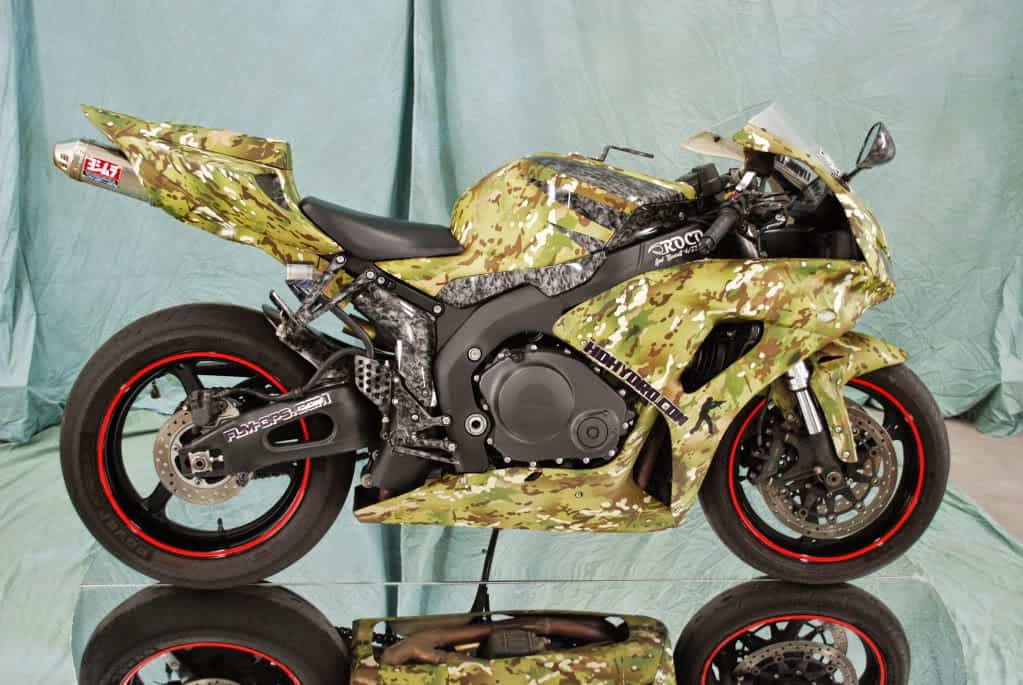
Vinyl

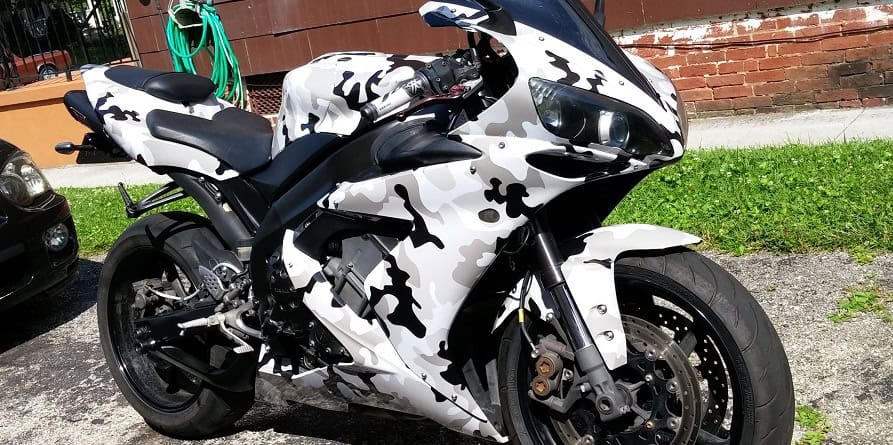
Vinyl (decals and wrapping) is perhaps the most affordable way to make your bike look unique. No special skills are required to apply images, and the stickers themselves cost mere pennies. The owner of the motorcycle can buy both ready-made “pictures” and order their production according to individual sketches. To do this, it is enough to contact a medium or large company that deals with outdoor advertising. They solve similar problems every day. The price of the issue in this case will be slightly higher, but it will still be very affordable compared to airbrushing or professional pinstriping.

vinyl on motocycle
texture in 96%

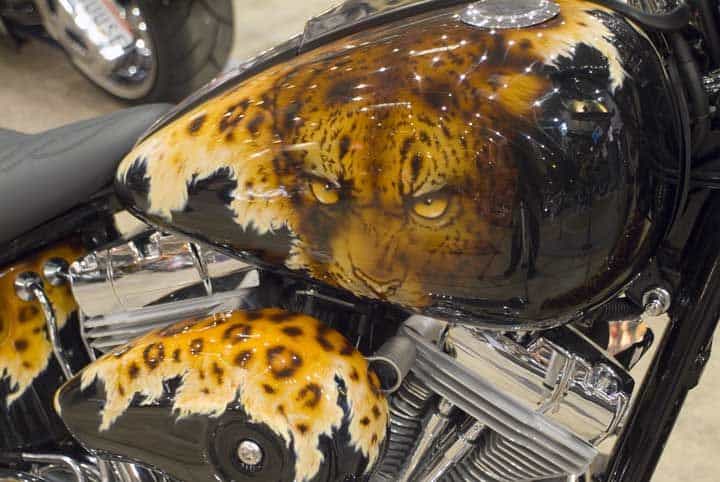
Airbrushing

This styling method is the decoration of a motorcycle with an airbrush. A miniature spray gun in skillful hands allows you to create real masterpieces. When turning to recognized craftsmen, you need to be prepared for the fact that the cost of their services will be comparable to the cost of an inexpensive new motorcycle. In this regard, real paintings made in this technique, as a rule, flaunt on premium bikes, the owners of which are not burdened with funds.

airbrushing used on motocycle
with custom framework

Hydrography

Hydrography (hydrographics, water transfer printing, aqua-immersion printing) is a surprisingly cheap way to get the quality of detailing, comparable to expensive airbrushing. Of course, the possibilities of such styling are not so wide, but it is available to almost everyone. The essence of hydrography is to transfer to the prepared part of the image, preliminary printed on a special film. The film is placed in a working bath filled with water and treated with an activator (solvent). There are many illustrative examples of work and the process of their manufacture on the Internet.

hydrography used on motocycle
classified as supported spine

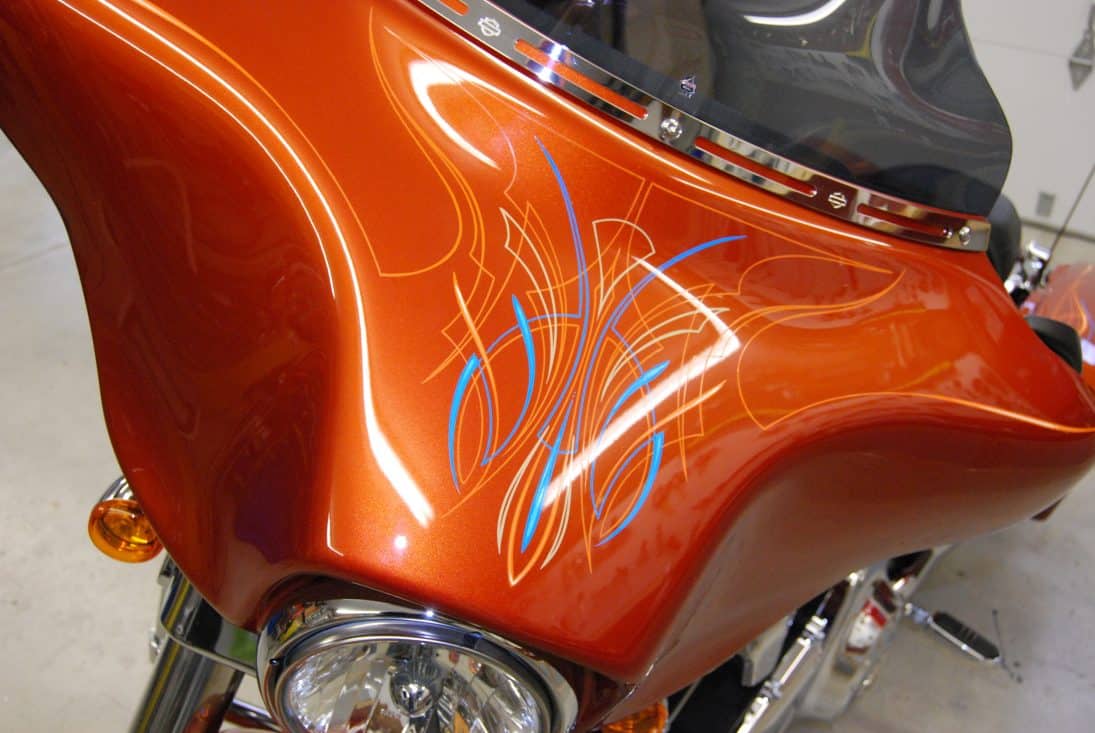
Pinstriping

This is the name of the technique for decorating surfaces with lines, which originated, like other styling methods, in the United States. The specificity of the work lies in the fact that the lines are drawn in one pass, and corrections are almost impossible. Hence – the high requirements for the performer’s skill and, accordingly, the corresponding cost of the service. To understand the capabilities of pinstriping, be sure to look at examples.

pintspriting used on the front

Buying a used motorcycle is a lottery that can turn out to be both a pleasant opportunity to save money and a loss of a lot of money and nerves. In order not to get into a mess, you need to correctly assess not so much the condition of the bike as the risk that you are not slipping something not quite worthy of attention, but thoroughly “powdered”.

BEFORE STARTING

Motorcycle seller

As a rule, the appearance and behavior of the previous owner can tell a lot: what is the owner, so is the exploitation. Unkempt motorcyclists ignorant of basic technical features, as a rule, do not pay due attention to maintenance, repair and operating conditions of the bike. You should also avoid sellers who do not inspire confidence or are punctured by any false information regarding the condition of the vehicle.
Indirect signs of frequent falls

Peeled arcs and crashes, touch-ups, stickers in the most obvious places indicate that the bike has often fallen (hidden damage is possible). If the seller denies this, then he has something to hide. It is normal for the bike to have one or two fall marks. This is not critical.
Indicator lights

When switching on the ignition, pay attention to the operability of the control lamps / pictograms of the instrument panel. Some of them can be disabled to avoid showing a fault when the engine is running. If the control lamp for a certain unit or function is disabled, check this place especially carefully.
Consumables

Check the condition of the consumables visually. First of all, pay attention to brake pads / discs, sprockets and chain, color and consistency of engine oil, presence of chips in the operating fluids, etc. Cheap or worn parts indicate that the owner saved on maintenance. This attitude towards the bike will definitely show itself in the future.

Tires

Check the tires for “toasty” zones (burnout is very bad: tires can be changed, but the bike was “hot” – transmission, clutch and engine suffered). The sidewalls (edges, sides) of the tires are erased – the owner likes to drive aggressively (in turns). Check the sidewalls for cracks and bumps: riding with them indicates a devil-may-care attitude towards yourself and the bike. Uneven rubber wear is possibly associated with a violation of the frame geometry, poor condition of the forks and shock absorbers.
Rims

Just roll the hanging wheel slowly to visually determine if the geometry is broken. Curved discs indicate that the motorcycle has been bouncing on curbs or driving on bad roads.

LAUNCH

Cold start

Starting a cold engine can cause sores to appear that are invisible at normal operating temperatures. In order not to be deceived, it is better to check the temperature of the engine and muffler by touch (be careful not to burn yourself). The engine starts in normal condition with half a turn. If in the first moments of work you hear blows, clanking and other extraneous sounds – this should alert. You can also learn a lot about the engine from the condition of the spark plugs. There is a lot of visual information on how to do this in the same YouTube.

AFTER STARTING

Test Drive

Driving along different roads is the most important thing. During a test drive, it is easier to understand how the bike steers, how the engine and transmission work in different modes. When riding another motorcycle, always check the brakes at low speeds, otherwise you may get into trouble. During a test drive, open the visor to better hear and smell the engine sound.

Much of the above is true for powerful, expensive bikes that are expensive to repair unless you notice a breakdown from the very beginning. Some malfunctions are a trifle and can be fixed for a penny, but by identifying them, you can check the veracity of the seller and his previous description of the condition of the bike. The key is to make your buying decision based on the general conclusions that you will draw from the motorcycle inspection process.